To build Emotional Intelligence (EQ) and become emotionally healthy, we must reconnect with our core emotions. We need to accept them and become comfortable with them. It’s important to be honest with ourselves and ask:
- Am I compassionate enough to care about understand the other persons’ feelings?
- Can I put myself in the other persons’ shoes so completely that I do not criticize or judge them?
- Can I let myself enter in to the others’ feelings and personal meanings to see these the way they do?
Following the flow of another person’s emotional responses takes give and take. You must also pay attention to the changes in your own emotional experience. Paying attention to others doesn’t diminish your own self-awareness. By taking the time to focus on others, you’ll gain insight into your own emotional state. You will also understand your values and beliefs better. For example, when you feel discomfort hearing others express certain views, you’ll have learned something important about yourself.
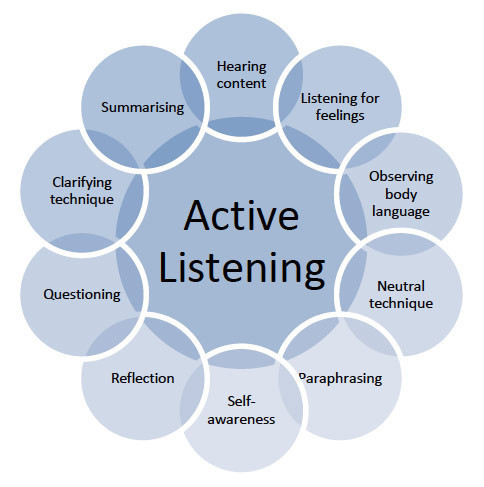
When you engage in active listening, it’s best to tune into what your conversation partner is saying without interrupting them. Pay careful attention to their body language and facial expressions. Periodically repeat to them what you think they’re trying to say. This ensures you understand them accurately.
Research suggests that practicing active listening can increase empathy and improve your satisfaction in relationships. For example:
Speaker: I really don’t want to work anymore. I like being home spending time with my children.
Reflection: So what I am hearing you say is that you like, and prefer being home with your children rather than working.
Using reflective listening allows the other person to feel as though you have listened to what they have said and is clear that you understood them.
Active listening involves approaching a conversation with a genuine desire to understand the other person’s feelings. It requires seeing their perspective without judgment or defensiveness.
Reflective Listening can also be a powerful tool of empathetic communication. In reflective listening, you reflect to the other person what you think you heard. Ensure that you reflect their feelings.
 Spark Empathy
Leave a comment